

Choosing a Metal Roof Color and Finish: Which Options Resist Fading?
Choosing a metal roof color is about more than matching siding, brick, or stone. At Indiana Metal Roofing Systems, located in Fort Wayne, Indiana, we encourage homeowners to consider the paint system, pigment quality, gloss level, solar exposure, and long-term fade resistance behind the color. Two new metal roofs can look nearly identical on installation day yet age differently because the protective finishes are chemically different.

What Gives a Metal Roof Its Color?
Most painted steel roofing begins with factory-coated metal. The visible color comes from a coating system engineered to protect the metal while maintaining appearance through years of sunlight, moisture, heat, and temperature changes.
Two common architectural metal coating categories are PVDF and SMP.
PVDF stands for polyvinylidene fluoride. Premium PVDF coatings are known for excellent resistance to fading, chalking, and weathering. SMP, or silicone-modified polyester, can also provide durable performance and is widely used on residential, agricultural, and commercial metal panels.
The important point is that color alone does not determine durability. The resin system and pigments producing that color matter considerably.
PVDF vs. SMP Metal Roof Finishes
PVDF is generally the premium choice when long-term color retention is a major priority. The Metal Construction Association notes that high-quality PVDF finishes use durable ceramic pigments and that pigment stability and resin quality are major factors determining how well a finish retains its original appearance.
SMP coatings can provide a strong balance between cost, hardness, durability, and appearance. However, color stability can vary among formulations because pigment packages are not identical. This is why homeowners should ask which coating system and manufacturer are being quoted, rather than accepting “painted metal” as a complete description.
What Are Fading and Chalking?
Although they often occur together, fading and chalking are different.
Fading is a measurable change in color caused largely by exposure to ultraviolet radiation and weathering.
Chalking occurs as the coating's resin breaks down at the surface, producing a lighter, powder-like appearance.
MCA identifies sunlight, heat, and moisture as major environmental conditions that degrade paint and explains that ultraviolet exposure contributes to both fade and chalk.
A roof can therefore appear lighter years later because its pigment has changed, its surface has chalked, or both processes have occurred.
Which Metal Roof Colors Resist Fading Best?
There is no rule that every dark roof fades faster than every light roof. Pigment chemistry is more important. MCA notes that bright, pure colors can be more susceptible to noticeable fading, while muted tones using high-quality inorganic pigments can provide greater color stability.
For example, a muted brick red can behave differently from an intense, bright red even though both belong to the same basic color family. Neutral colors such as charcoal, bronze, gray, brown, and muted earth tones are popular partly because they complement many exterior materials and can age gracefully.

A Metal Roof Finish Can Remain Adhered Long After Its Appearance Changes
Unique Fact: Technical guidance published by IIBEC explains that a properly applied metal-roof paint system should last 30 years or longer in terms of adhesion, including resistance to cracking, blistering, and peeling. The more difficult long-term question is how well the finish retains its original color and gloss.
This distinction is important for homeowners. A coating can remain firmly attached to the metal while gradually experiencing fading, chalking, or loss of gloss. Adhesion, color retention, and gloss retention are different measures of coating performance, which is why finish warranties should be evaluated by their actual coverage and performance criteria—not simply by the number of years advertised.
Source: IIBEC, Metal Roofing from Aluminum to Zinc Part 3: Paint Finishes for Metal
Does a Dark Metal Roof Get Hotter?
Generally, darker surfaces absorb more solar energy than lighter, more reflective surfaces, but color is not the only variable affecting roof temperature. Modern coating technology can use pigments engineered to improve solar reflectance. The U.S. Department of Energy has researched dark-colored pigments designed to reflect or otherwise manage near-infrared solar energy, demonstrating that visible color does not tell the entire story about solar performance.
DOE guidance identifies solar reflectance, retention of reflectance over time, and thermal emittance as important characteristics when evaluating cool-roof materials.
Homeowners should therefore compare actual product performance data rather than assuming every black roof or every white roof performs identically.
Gloss Level Changes How a Metal Roof Looks
Gloss affects appearance almost as much as color. High-gloss finishes reflect more visible light and can make surface variations easier to notice. Lower-gloss or matte finishes often create a softer architectural appearance.
This matters particularly with standing seam roofing because broad, flat panel areas can display slight visible waviness known as oil canning. Oil canning is primarily an aesthetic condition rather than evidence that the roof is failing.
Panel width, metal thickness, substrate flatness, installation, temperature, lighting, and panel design can all affect its visibility. Striations or minor stiffening ribs may help make it less noticeable.

Always Compare Physical Metal Roofing Samples
A computer monitor should not make the final color decision. Screen brightness, photography, editing, shadows, surrounding materials, and even the time of day can dramatically change how a roof color appears digitally. A charcoal panel may appear nearly black in one photograph and medium gray in another.
Request physical samples and examine them outdoors beside the home's siding, brick, stone, trim, gutters, and other permanent exterior colors. View the sample in both direct sunlight and shade.
For our Fort Wayne, IN projects, we consider finish selection part of the roofing-system decision. Northeast Indiana roofs experience summer sunlight, humidity, rain, snow, freezing temperatures, and repeated seasonal temperature swings, so homeowners should consider how a finish will look years after installation, not merely how the color appears when new.
Consider the Home's Permanent Exterior Features
Roofing may remain on a home through multiple siding or trim changes. Start with exterior materials that are least likely to change.
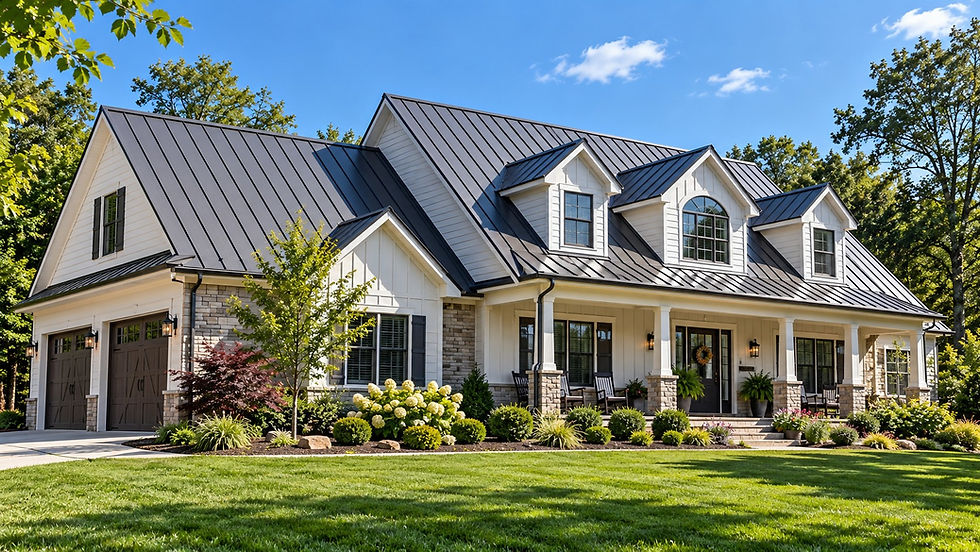
Warm brick and stone often pair naturally with bronze, brown, charcoal, or other earth tones. Cooler gray masonry may coordinate better with black, slate, gray, or similarly cool finishes.
Also check neighborhood restrictions. Some homeowners associations regulate roof colors, reflectivity, profiles, or materials.
Read our blog: Fort Wayne, IN Standing Seam Metal Roofing: Matching a Home & Detached Garage in Slate →
Frequently Asked Questions About Metal Roof Colors
Does black metal roofing fade?
Every exterior coating experiences weathering over time. The amount of visible change depends heavily on coating chemistry, pigment quality, exposure, environment, and age, not simply whether the roof is black.
Is PVDF better than SMP?
PVDF generally provides superior long-term color and chalk resistance. High-quality SMP can still be an appropriate roofing finish where its performance characteristics and price fit the project.
What is the safest metal roof color for resale?
Neutral colors such as charcoal, black, gray, bronze, and brown typically coordinate with a broad range of exterior designs. Architectural compatibility should take priority over short-lived color trends.
Can a metal roof color improve energy efficiency?
Reflective roofing can reduce solar heat gain, particularly in cooling-dominated climates. However, climate, insulation, ventilation, roof construction, HVAC efficiency, solar reflectance, and thermal emittance all influence actual energy performance.
Should I choose my metal roof color from an online photo?
No. Online images are useful for narrowing choices, but a physical sample viewed against the actual home in natural light provides a much better representation.
Conclusion
The metal roof color most likely to look good decades from now is not determined by shade alone. Coating chemistry, pigment stability, chalk resistance, gloss, solar exposure, and manufacturing quality all influence how a finish ages. PVDF provides exceptional color-retention performance, while quality SMP systems can offer a durable and economical alternative. By comparing coating specifications and physical samples instead of choosing solely from a screen, homeowners can select a metal roof finish designed to complement the home today and maintain its appearance far into the future.
Comments